
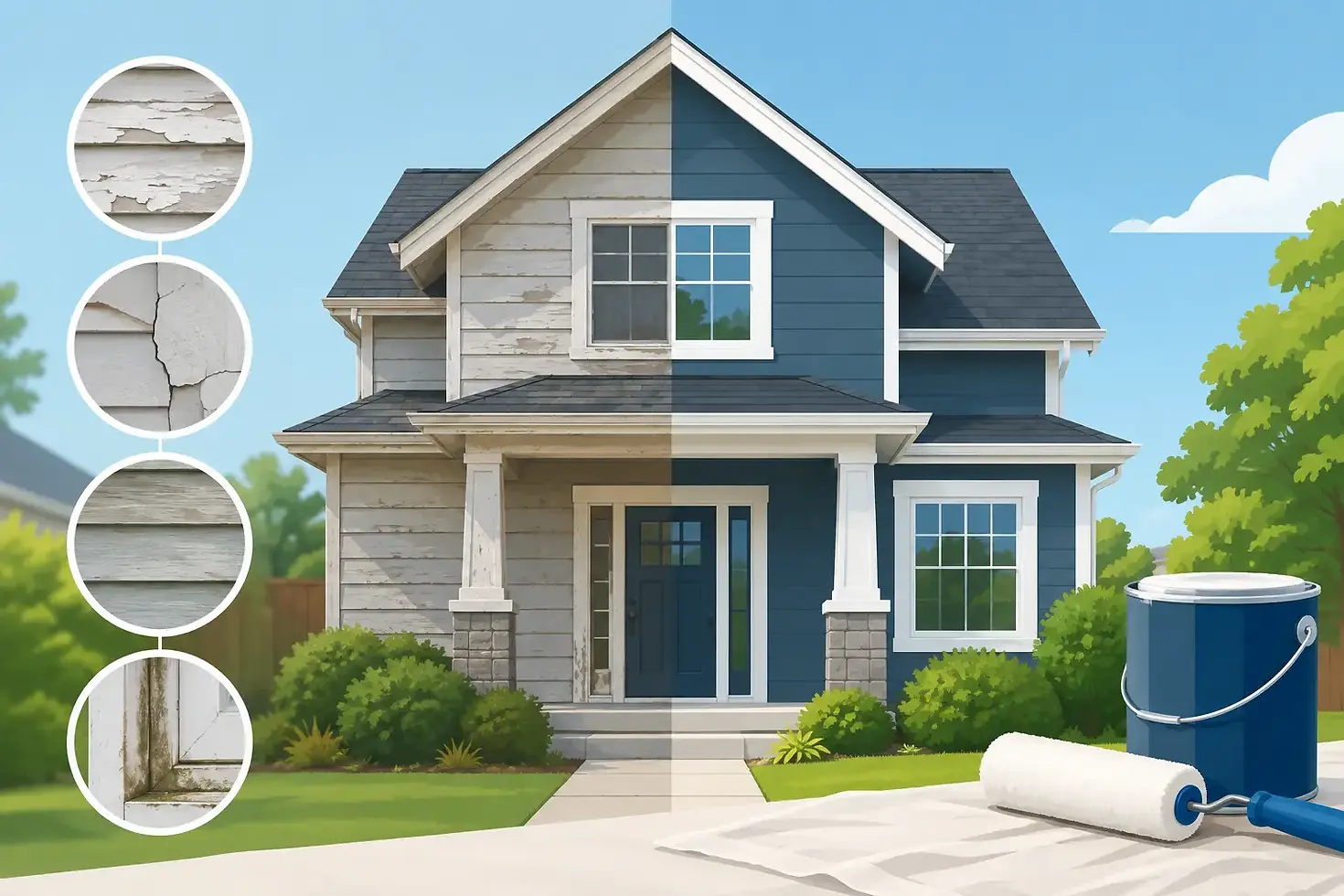
8 Signs It’s Time to Repaint House Exterior
A faded front door, peeling trim, or chalky siding can make a well-kept property look neglected long before there is a serious problem. Knowing when to repaint house exterior is about more than refreshing curb appeal. A quality exterior paint job helps protect siding, trim, and other surfaces from moisture, sun exposure, and everyday wear.
Paint does not fail on the same schedule for every home. Climate, the direction your walls face, the material beneath the paint, and the quality of the last job all affect how long the finish lasts. The best time to act is usually when early warning signs appear, before minor deterioration becomes a more involved repair.
8 Signs It Is Time to Repaint Your House Exterior
1. The color is noticeably faded
Exterior color naturally fades under sunlight, especially on the sides of the home that receive the strongest afternoon sun. Deep reds, dark blues, and other rich colors may show fading sooner than lighter shades. Fading alone is often a cosmetic concern, but it can also signal that the paint film is nearing the end of its ability to protect the surface.
If one side of the home looks dull while another still looks fresh, compare them in daylight. A new coat of paint can restore a consistent, welcoming appearance and help your home look cared for from every angle.
2. Paint is peeling, cracking, or blistering
Peeling paint is one of the clearest signs that it is time to schedule exterior painting. Once paint lifts away from the surface, moisture can reach the wood or other material underneath. Small cracks can lead to bigger areas of failure, particularly after rain, humidity, or freeze-thaw cycles.
Blistering may occur when moisture becomes trapped beneath the paint or when paint was applied under unsuitable weather conditions. The right repair is not simply painting over the damaged area. Loose paint needs to be removed, the cause of the issue should be addressed, and the surface must be properly prepared for a lasting finish.
3. The surface feels chalky
Run your hand across painted siding. If a powdery residue comes off on your fingers, the finish may be chalking. This happens as paint binders break down from weather exposure, leaving pigment on the surface.
Some mild chalking can be cleaned and painted over with proper preparation. Heavy chalking, however, needs careful washing and priming so fresh paint can adhere correctly. Skipping that step can shorten the life of the new finish.
4. Caulk around windows and trim is failing
Exterior caulk plays a quiet but important role in protecting your home. It seals small gaps around windows, doors, trim boards, and siding transitions where water could otherwise enter. When caulk is cracked, shrunken, brittle, or missing, repainting is often a good opportunity to restore those seals.
A professional exterior painting project should include attention to these details. Fresh paint looks better when the lines around trim are clean, but more importantly, quality caulking supports a tighter, better-protected exterior.
5. Wood shows signs of rot or water damage
Soft wood, dark staining, warped trim, and crumbling boards should never be ignored. Paint is not a repair for damaged wood, and applying it over rot only hides the issue temporarily. The affected material should be evaluated and repaired or replaced before painting begins.
This is where planning matters. Addressing small areas of deterioration early is usually more manageable than waiting until water damage spreads behind trim or siding. A well-prepared surface is the foundation of a high-quality finish.
6. Mold, mildew, or stains keep returning
Green, black, or gray growth on siding may be mildew, algae, or mold. It commonly appears on shaded walls, near trees, and in areas that stay damp after rain. Before repainting, the surface must be cleaned with the right method and allowed to dry fully.
Repainting can improve the appearance of stained siding, but the surrounding conditions still matter. Trimming back vegetation, improving drainage, and keeping gutters in good condition can help reduce recurring moisture problems. Paint performs best when the surface has a fair chance to stay dry.
7. Your home looks dated or no longer fits your vision
Not every repainting project starts with paint failure. Sometimes the exterior is structurally sound, but the color scheme no longer reflects the home you want to come home to. A new exterior color can update a traditional property, highlight architectural details, or create a more cohesive look with a new roof, landscaping, or front door.
For a small business, exterior paint can also affect first impressions. A clean, professionally painted storefront or office building helps create a welcoming environment for customers, tenants, and employees. The right colors should support the property’s character while remaining practical for its setting.
8. It has been several years since the last paint job
As a general guideline, many homes need exterior repainting every five to 10 years. That range is broad for a reason. Painted wood siding may need attention sooner than fiber cement, while brick or stucco can follow a different maintenance schedule. Harsh sun, coastal moisture, heavy rain, and temperature swings can all shorten the lifespan of exterior paint.
Instead of relying only on a calendar, inspect the property once or twice a year. Look closely at trim, window sills, fascia boards, doors, and the sunniest side of the building. These areas often show wear first.
When to Repaint House Exterior for the Best Results
The condition of the surface tells you whether painting is needed. Weather helps determine when the work should be done. Exterior paint needs appropriate temperatures and dry conditions to cure properly, so mild, stable weather is generally ideal.
Spring and fall are popular painting seasons in many parts of the United States because temperatures are often more moderate. Still, local conditions matter more than the season on the calendar. A rainy week in spring may not be suitable, while a dry stretch in early summer may be an excellent window for the project.
Avoid painting immediately before rain, during very high humidity, or when temperatures are too cold or excessively hot for the product being used. Direct, intense sun can also make paint dry too quickly on certain surfaces. An experienced painting team can plan the work around forecasts, surface conditions, and the requirements of the selected coating.
Preparation Determines How Long the Finish Lasts
A fresh color may be the most visible part of an exterior painting project, but preparation is what protects the investment. Proper work commonly includes washing away dirt and mildew, scraping loose paint, sanding rough edges, repairing damaged areas, replacing failed caulk, and priming surfaces where needed.
The trade-off is straightforward: careful preparation takes more time than a quick coat over worn paint, but it supports better adhesion and a more durable result. It also gives homeowners the chance to address small exterior repairs while they are still manageable.
Color selection deserves attention as well. Lighter colors can make a home feel larger and may show less sun fading, while darker colors can create striking contrast but often need more maintenance in intense sunlight. Consider the roof color, fixed stone or brick features, neighborhood character, and how the paint will look at different times of day.
A Fresh Exterior Starts With an Honest Assessment
If you are seeing peeling paint, open caulk lines, fading color, or early signs of surface damage, it is worth having the exterior evaluated before the problem grows. D&M Services provides licensed and insured workmanship, careful preparation, and high-quality finishes designed to bring your vision to life.
A well-timed repaint does more than make a property look new again. It helps preserve the surfaces that make your home or business a place you can feel proud to welcome people into.



Comments